 Mushrooms
 Flowers
 Bees
 Butterflies
 Monarchs
 Cattle panel trellises
 Rebar trellises
 London
 Pittsburgh, Nashville, Kentucky, Atlanta



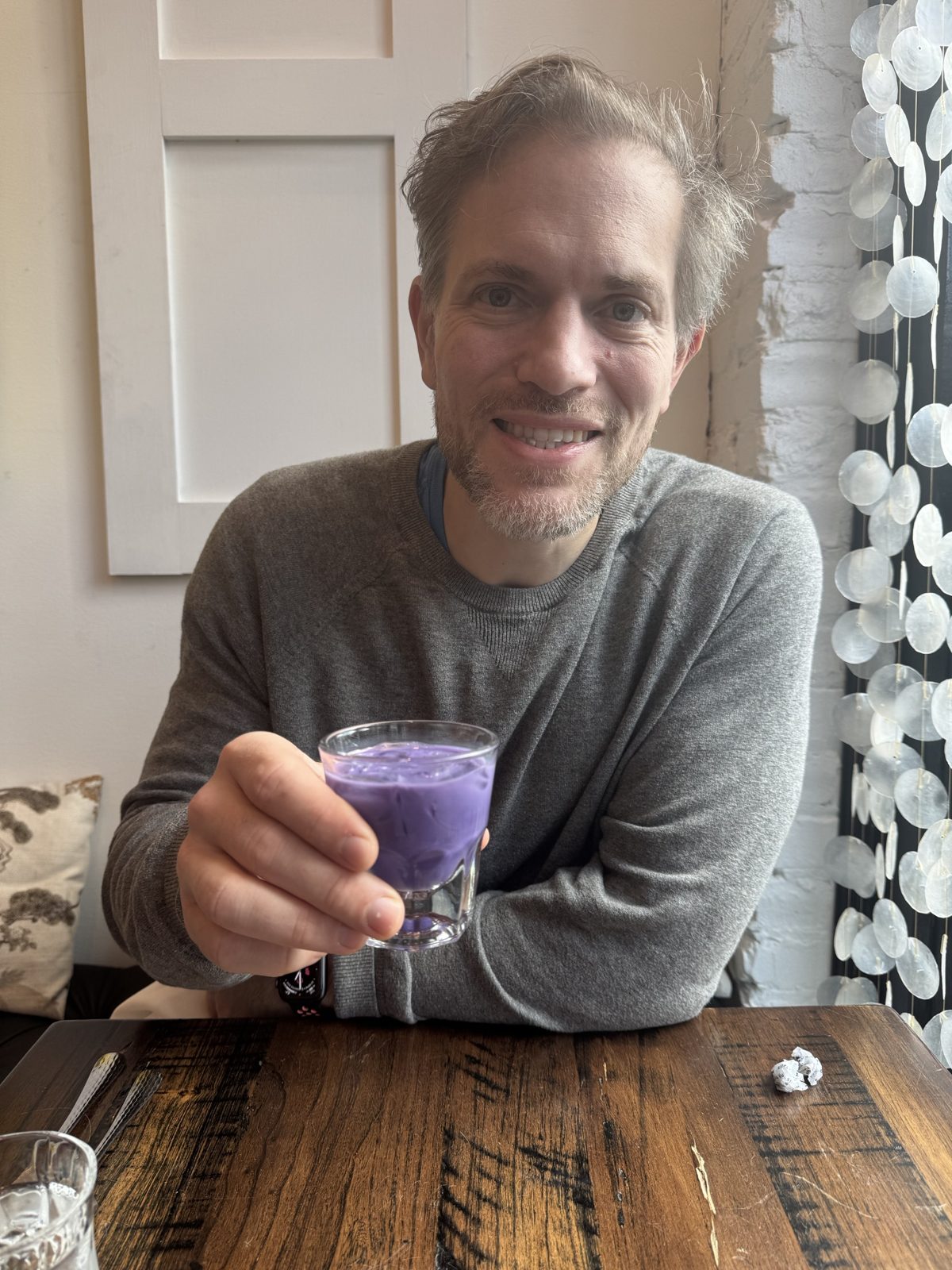
Bolusing
I bolus every time I eat. If I’m going to do it that often, I should probably be good at it.
Food, insulin, and exercise, and for each one, when and how much.
- Before lunch105
- Peak152
- Back under 1401:23 PM
- Time in range100%
My diabetes care is managed in close partnership with my care team. This page shares what works for me. It isn't medical advice. Talk with your own doctor or diabetes care team before you change anything about your care.
So many things, all at once
Food, insulin, and exercise, but also sleep, stress, being sick, hormones, the heat, and a lot more. Adam Brown counted 42 of them,1 and people with diabetes talk about that list all the time. With that many things moving at once, it’s hard to tell what caused what.
That’s why it’s easiest to learn when as few things as possible are changing. You won’t eat the same measured breakfast every day for the rest of your life, but doing it for three weeks can teach you how your body responds in the morning. What you learn in those three weeks, you get to use for the rest of your life.
It can feel hard while you’re learning. It isn’t about eating the same way forever, or for every meal. It’s about giving yourself the best chances to learn.
Want the whole story? Adam Brown’s book, Bright Spots & Landmines, free from diaTribe.
For bolusing, three matter most
You want to be able to eat anything you want. A little planning makes it easier.
-
1
Food
WhenIt matters when I’m eating and how fast the food will hit. A pretzel gets a longer pre-bolus than a salad.
How muchI count the carbs as honestly as I can, using the label, a food scale, or a nutrition menu when I eat out. Then I match my insulin to them with my insulin-to-carb ratio.
-
2
Insulin
WhenI bolus before I eat, usually about 15 minutes ahead, and closer to the meal if I’m at a lower number. How long it keeps working after depends on the type of insulin.
How muchI take units for the carbs, plus a correction if I’m running high. That adds up to 10 to 25 units a day.
-
3
Exercise
WhenThe past two daysAll my exercise adds up, not just today’s. A long walk yesterday and a day in the garden today both count.Right nowMoving with insulin on board makes it act faster.How muchMore exercise means each unit does more. After a lot of it, I go by how fast my glucose is changing, not my usual pre-bolus.
Quick takeaways
If you only read one part, read this.
Pre-bolus. It’s the pillar.
For most meals, my insulin goes in about 15 minutes before I eat. It’s the habit everything else builds on.
After a big workout, it depends on the meal.
A small meal? I eat, wait, and respond. A big one with extra carbs? I probably still bolus for the extra. It really varies.
Set your alerts to your targets.
My alerts sit at the edges of my range, so I hear about a rise while a small, quick fix still works. My alarm settings →
Counting carbs
Carbs turn into sugar in the blood. Before I eat, I count the carbs and match my mealtime insulin to them with my insulin-to-carb ratio, plus a correction if I’m running high. My ratio and correction factor come from my care team.
You don’t need to know the carbs in everything, just the foods you actually want to eat. And be real with yourself. How many M&Ms are really in a serving? Use a scale, and count the nuts. The goal is to be as accurate as you can, so you know, consistently, how many carbs you’re eating.
Eating out? Ask for a nutrition menu! Not every place has one, but it never hurts to ask. If your local spot doesn’t, find a similar meal that does have the numbers, and use it to guesstimate.
What to watch out for on labels
The ones that surprised me with a fast rise
Sugar isn’t the only thing to look for. Starches and syrups made from corn, rice, and potatoes turn into sugar fast, and they show up in foods that don’t taste sweet at all.
- On the ingredientsCorn starch, modified food starch, potato and tapioca starchThickeners. They’re in gravies, soups, sauces, and takeout, and they turn into sugar quickly.
- On the ingredientsMaltodextrinMade from corn, rice, or potato starch. It can raise blood sugar faster than table sugar,2 and it hides in “low sugar” snacks, protein powders, and sweetener packets.
- On the ingredientsDextrose, corn syrup, rice syrupAll fast sugars, even when the front of the box doesn’t say “sugar”.
- On the front“Sugar free” and “no sugar added”Not the same as carb free. Some sugar alcohols, like maltitol, still raise my blood sugar, and fruit juice concentrate is still sugar.
- On the ingredientsWheat vs. whole wheatThis one really got me. “Wheat” or “wheat flour” is usually refined white flour.3 Only “whole wheat” means the whole grain, with more fiber, which can slow the rise.
- On the panelServing size vs. the whole bagThe numbers are per serving. Check how many servings are in what you’re actually eating.
My reviewApp · iPhone · Dexcom partner
SNAQ, for checking my carb counts
SNAQ estimates the carbs, protein, and fat in a meal from a photo, then shows how that meal moved my glucose afterward. It’s a Dexcom partner app, so it reads my Dexcom data directly.4
- Setting it up
- Install SNAQ – Diabetes Food Tracker from the App Store.5 In its settings, connect your Dexcom account. Then snap a photo of each meal and SNAQ lines it up with your glucose curve.
- Good to know
- SNAQ sits outside my Nightscout setup. It doesn’t send anything to Nightscout or Zukka, and my followers won’t see it.
- What it costs
- SNAQ Premium: $60 a year, or $27 every 3 months, or $96 for 3 years on SNAQ’s website. App Store prices vary by plan.6 I pay for it. Checked October 2026.
- My verdict
- Seeing the data is so valuable. When I want to look at my carbs, then reflect on exercise and my blood sugar, this is the best view, because it’s built off my meals.


Timing the bolus
Different devices give insulin in different step sizes. My CeQur patch gives 2 units per click, so a dose is 2, 4, or 6 units. While I was learning, those set amounts helped me stay consistent with meals I eat often, so I could get to know how I respond.
Which insulin I take changes the timing too. Afrezza, the one I inhale, starts in about 12 minutes and is done in 1.5 to 3 hours. Humalog starts in 15 to 30 minutes and lasts 4 to 6 hours.7 So how far ahead I bolus, and how long I watch for it still working, depends on which one I’m using.
How each one works → Insulin delivery
Try the timing yourself → Bite 3: Learn now, bolus later
When I’m moving
Exercise changes my insulin in two ways, and they work on different clocks. A walk after dinner or a day in the garden changes the math.
The past two days
- 2 days agolong walk
- Yesterdaygarden day
- Todayit all adds up
All my exercise over the past two days adds up, not just today’s. The more I’ve done, the more sensitive I am, so each unit works faster and does more.
Right now
Insulin on board+Moving=It acts faster
Moving while I still have insulin on board makes it act faster, because exercise moves it through my bloodstream more quickly.8
After a lot of exercise
Pre-bolusing is still the pillar. But after a lot of exercise, the usual head start can be too much, too soon. So I change how I do it.
It’s better to respond quickly a few times than to over-bolus far too soon.
Set your alerts to match your targets
Responding quickly only works if I know something’s happening. My goals are on the Reports page: 97% of the day between 70 and 180, and over 90% between 70 and 140. So my alerts sit right at those edges. My phone and watch tell me the moment I start to leave my range, while a small fix still works.
- Top of my tight rangeHigh alert at 140The early one. I hear about a rise while it’s still small, so the fix is small too.
- Top of my rangeVery high at 180If I get here, the early one didn’t do its job. Time to act.
- Bottom of my rangeLow at 75, very low at 70Plus a fast-drop alert, which matters most after exercise, when insulin works faster.
The speed alerts tell me what to do next. A fast drop on a walk is my cue to treat before I get low, not after. A fast rise after a meal can be my cue to go for a walk.
Sources
- diaTribe, 42 factors that affect blood glucose
- Healthline, Maltodextrin: is it bad for you?
- U.S. Food and Drug Administration, Whole grain label statements (draft guidance)
- Dexcom, SNAQ connected app
- Apple App Store, SNAQ – Diabetes Food Tracker
- SNAQ, SNAQ Premium pricing
- ADCES danatech, Insulin types
- The Lancet Diabetes & Endocrinology, Exercise management in type 1 diabetes: a consensus statement (Riddell et al., 2017)